































Tura/Goalpara, May 26: The discovery of critical mineral deposits in the Tukreswari and Sijukona hills of Assam’s Goalpara district has raised hopes of a major economic and strategic breakthrough for both the state and the country, with the Geological Survey of India said to have identified reserves of several high-value minerals in the area. Reports indicate that the mineral reserves include lithium, graphite, cobalt and vanadium, resources that are increasingly vital for modern technology and industrial production. These minerals are widely used in electric vehicles, rechargeable batteries, smartphones, laptops, defense equipment, missile systems and space technology. India imports 96 percent of its lithium today. A strike here flips the script on that dependence and hands New Delhi real leverage in the global clean-tech race.
The exploration work is reportedly being conducted as part of the Centre’s National Critical Mineral Mission, a long-term programme launched in 2024-25 with an estimated investment of nearly Rs 16,300 crore. The mission is expected to continue until 2030-31 and focuses on identifying and developing critical mineral resources across the country. According to reports, several agreements linked to the commercial development of mineral deposits in Goalpara, estimated between 1,000 and 5,000 PPM, were also signed with domestic and international firms during Advantage Assam 2.0.
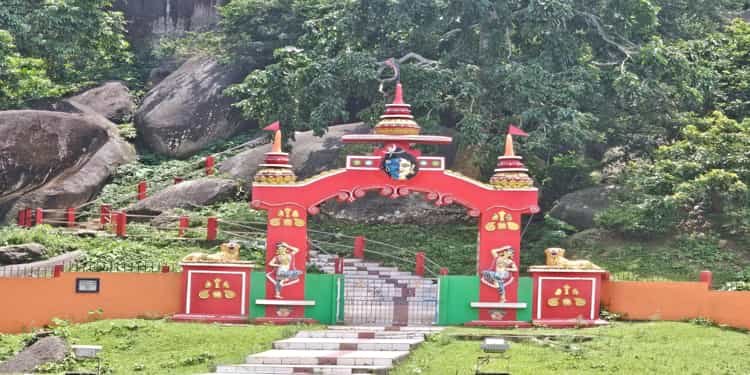
The findings have sparked enthusiasm among residents living near the historic Tukreswari Temple area. Many locals see the discovery as a potential turning point for the region as well as for India’s push towards reducing dependence on imported critical minerals. The Tukreswari Temple, which is around 350 years old, is one of Assam’s most revered religious sites, known for its deep historical and cultural significance. Perched atop Tukreswari Hill, the temple not only pays homage to Goddess Sati but also features a shrine dedicated to Lord Shiva.
The pulse beats fastest in Vimajuli, the stretch of the Tukreswari hills where 80 percent of the villages belong to the Garo community. The mood is a mix of pride and suspense. People are thrilled their soil might hold the key to India’s future, yet no one has confirmed if Vimajuli itself lies inside the survey zone. Officials have released no maps so far. Still, the villagers are clear about their hope. They say if this treasure truly lies under their feet for Assam and for India, there could be no greater happiness than this. Residents believe the project could open up new employment opportunities, stimulate trade and improve the district’s economy. The initiative would create employment and business opportunities for local people, while also helping to reduce unemployment and improve the district’s economic conditions, a resident said.
Heritage remains untouched. The survey lines steer clear of the ASI-protected Sri Surya Pahar with its ancient Shiva Lingas, Buddhist stupas and Jain relics. That legacy stays sacred.

Next comes the grind of proof. Detailed drilling, environmental clearances, and hard tonnage numbers. If the ground matches the early buzz, Goalpara could surge from quiet frontier to India’s critical minerals capital. And the Garo hills of Vimajuli could go from overlooked to indispensable.