































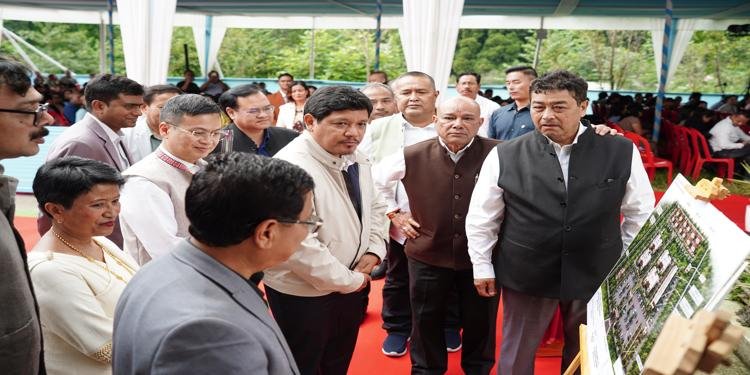
Shillong Aug 19: Chief Minister Conrad K Sangma on Wednesday laid the foundation stone for Meghalaya’s new State Veterinary Hospital at Upper Shillong, marking a ₹65 crore push to transform animal healthcare in the state.
The ceremony was held at INDO DAN Guest House, Upper Shillong. Animal Husbandry & Veterinary Minister Shanbor Shullai, Mylliem MLA Ronnie V Lyngdoh, Chief Secretary Dr. Shakil Ahammad and senior officials of the department were present.
Spread over 161 acres of departmental land, the hospital is envisioned as the apex referral centre for the state. The Chief Minister said the project is about building a complete ecosystem for animal husbandry, not just running schemes.
“The larger purpose and goal should be to create livelihoods and to minimize demand and supply differences through systematic efforts,” Sangma said.
He described the new hospital as the “hub” with district and subdivision facilities acting as “spokes”. “This hospital cannot function if we do not strengthen infrastructure, machines, equipment, medicines and manpower at all levels,” he added, calling for a phase-wise approach and a detailed five-year plan for the department.
Sangma also urged officials to create avenues for entrepreneurship and investment in the sector, and stressed on timelines and quality. “Let us ensure that this veterinary hospital is one of the best hospitals and research centres in the Animal Husbandry and Veterinary sector for the entire North East,” he said.

Officials said the existing State Veterinary Hospital is facing space and infrastructure constraints. More than 25% of cases treated daily are referrals from across Meghalaya, underlining the need for a stronger state-level facility.
The new hospital will bring specialized care, advanced diagnostics, radiology, surgery, orthopaedics, inpatient services, laboratories and pharmacy under one roof. It will also provide 24×7 emergency and critical care.
The government expects it to cut down on referrals outside the state by handling complex cases locally, saving farmers time and money. The facility will also strengthen disease surveillance, food security and preparedness for zoonotic diseases.