































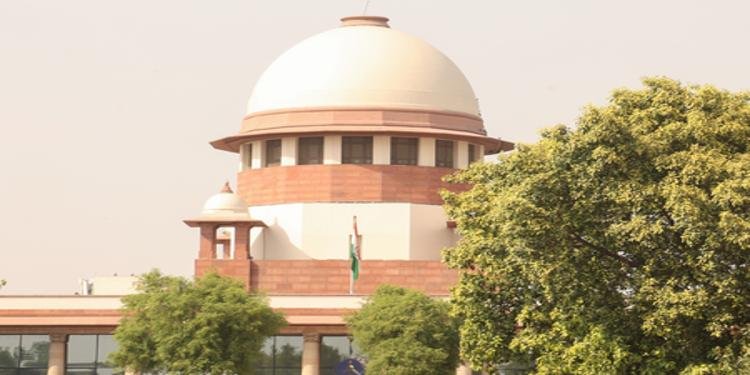
New Delhi, Oct 5: In a significant move, the Supreme Court on Monday refused to entertain a PIL on Assam’s recurring flood nightmare but did not let the authorities off the hook.
A Bench headed by Chief Justice of India Surya Kant declined to issue notice on the plea filed by advocate Ujjawal Gaur, observing that the crisis flagged by him was “not essentially legal” in nature, yet serious enough to warrant urgent executive action.
Instead of dismissing it outright, the CJI-led Bench ordered its registry to forward the entire petition to all respondent authorities — including the Centre, Central Water Commission, NDMA, Brahmaputra Board and the Assam government with a clear message: Look into it and take remedial measures.
Arguing in person, Gaur told the court that Assam’s annual devastation was not an act of God but a story of statutory failure. He contended that laws like the Brahmaputra Board Act, 1980, the Assam Embankment and Drainage Act, 1953 and the River Boards Act, 1956 mandate scientific, basin-wide planning for floods, erosion and drainage — mandates that remain on paper.
The PIL leaned heavily on scathing CAG audits, including the 2018 Performance Audit on “Flood Control in Assam” which flagged missing hydrological and morphological studies, no floodplain zoning, and poor execution and monitoring of flood-control works.
The petition painted a grim picture on the ground — choked drains, sluice backflow, encroached natural drainage channels, heavy siltation and a changing river morphology making the Brahmaputra Valley more vulnerable every year.

It also flagged a crippling manpower crunch 65 of 182 sanctioned technical posts lying vacant in the Brahmaputra Board in 2024, as admitted in Parliament on December 12, 2024 and financial gaps, citing CAG figures that Rs 1,112.50 crore remained uninvested in the State Disaster Response Fund as on March 31, 2025, with Rs 555.13 crore saved and unspent under the Water Resources grant in 2024-25.
Gaur clarified he was not asking the court to design embankments or stop floods altogether, but to force statutory bodies to do their job, updated scientific studies, an integrated basin-wide flood, erosion and drainage plan, audit of existing embankments, protection of natural drains and floodplains, more technical staff and a transparent accountability mechanism.
The Supreme Court’s message was clear, it won’t run flood management from courtrooms, but authorities can no longer ignore the warning.