
















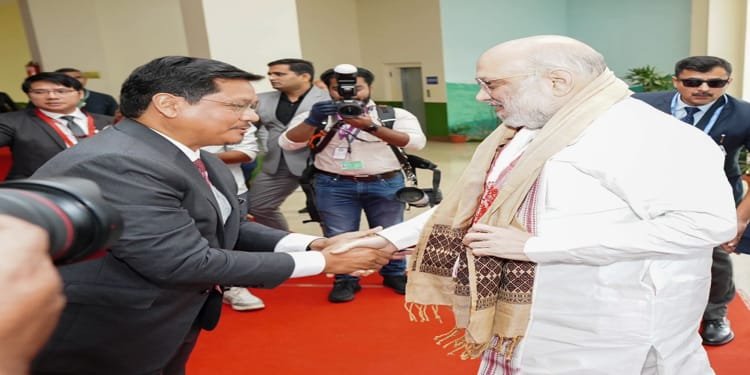
Shillong(Meghalaya), May 4 : Chief Minister Conrad K. Sangma has gone on the offensive with Union Home Minister Amit Shah, demanding Inner Line Permit for Meghalaya, pressing for assent to the State’s contentious Residents Safety Bill, pushing Khasi and Garo into the Eighth Schedule, and rejecting the Centre’s proposed Sixth Schedule changes that would force tribe-based nominations in Autonomous District Councils.
Sangma revived the Dec 19, 2019 Assembly resolution for ILP under the Bengal Eastern Frontier Regulation, 1873, saying the CAA’s Sixth Schedule exemption “will not be adequate to protect and safeguard the interests of the tribal population” of Meghalaya, which shares a long Bangladesh border and has over 85% tribal population. He wants safeguards on par with Manipur to check illegal immigration.
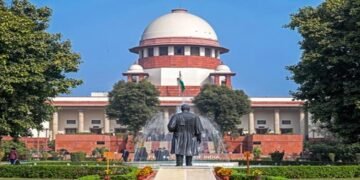
The hard push comes as the Ministry of Home Affairs has repeatedly flagged the Meghalaya Residents Safety and Security Act amendment for violating Article 19(1)(d) and (e), with letters dated July 11, 2023, Sept 26, 2025 and May 22, 2026 warning it resembles ILP restrictions in other Northeastern states. Meghalaya shot back, after consulting the Advocate General, that the Bill falls squarely under Article 246(3) read with Entries 1 and 2 of List-II on Public Order and Police, does not restrict movement or residence, and is saved by Article 19(5) for protecting Scheduled Tribe interests. Citing the Supreme Court’s 2026 ruling in _Governor and President: Assent, Withholding or Reservation of Bills, Sangma asked the Centre to grant assent or return the Bill to the Governor under the dialogic process laid down by the Court.
Meghalaya also renewed its long-standing demand for Eighth Schedule status for Khasi and Garo tribes. The Assembly passed a resolution on Nov 27, 2018, submitted to MHA on Dec 14, 2018, arguing both languages meet eligibility and inclusion would unlock Sahitya Akademi awards, funding, jobs and UPSC subject status. Khasi and Garo were upgraded from associate to official languages through the Meghalaya Official Languages Ordinance, 2026.

On the Constitution (125th Amendment) Bill, 2019, Meghalaya rejected the Centre’s plan to nominate members from un-represented tribes to KHADC, GHADC and JHADC. With 17 major tribes and 37 Kuki sub-tribes, the State said the proposed 4 nominated seats in KHADC and GHADC and 2 in JHADC make equitable distribution impossible and endanger fraternity. Instead, Meghalaya proposed nominations be limited to reputed academicians, sportspersons who have represented the State nationally or internationally, women with administrative or judicial experience, and eminent entrepreneurs or professionals. For JHADC, one nominee must be a woman.
The State also slashed the proposed council sizes. It rejected GHADC’s expansion to 42 with 6 nominees, including four from un-represented tribes, and said it should cap at 40 with 36 elected and 4 nominated, at least two women. KHADC should go to 40 with 36 elected and 4 nominated, again with no mandatory tribe quota. For smaller JHADC, Meghalaya wants 32 members, 30 elected and 2 nominated, with at least one woman.
On electoral machinery, Meghalaya said the State Election Commission should control rolls and conduct of all District Council elections, leaving Village Dorbars/Village Councils to the District Councils. Every recognized village should have a Village Council/Village Dorbar, with the Sirdar/Nokma/Rangbah Shnong/Headman as ex-officio Chairman and elected Secretary and members, powers governed by District Council rules. Meghalaya further demanded a Governor’s veto, seeking that provisions on District Planning Committees and new economic planning powers for ADCs should not apply to Meghalaya until the Governor approves. The State urged the Centre to incorporate these views in the 125th Amendment Bill.
Finally, Sangma flagged concerns over the Foreign Contribution (Regulation) Amendment Bill, 2026, saying stakeholders in Meghalaya are worried about the proposed power of seizure of property. He said he has met the Union Minority Affairs Minister and wants wider consultation before any amendments are adopted.