






















Shillong, Sept 3: Ten years of the Juvenile Justice Act in Meghalaya, and children are still failing the system.
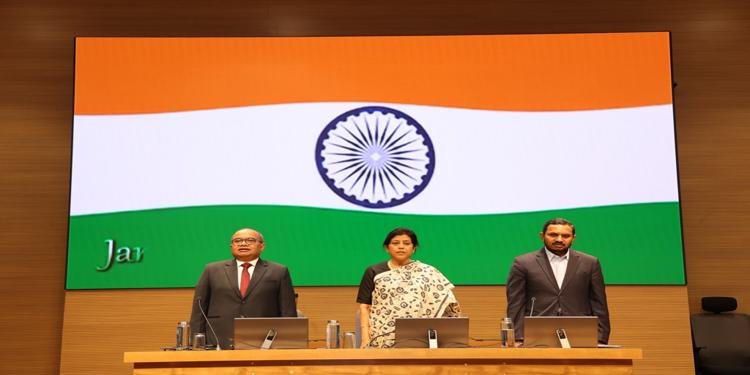
At a high-powered state-level consultation on “JJ Act, 2015: A Decade of Implementation and Way Forward” held Thursday at the High Court Auditorium, Chief Justice Revati Mohite Dere said the exercise was not a ritualistic review of a statute but an audit of our conscience and our promise to our children.
The consultation was organised by the Juvenile Justice Committee of the High Court of Meghalaya in collaboration with the Social Welfare and Health Departments.
Justice Dere said the Act was enacted to shift justice from retribution to reform, where children in conflict with law are treated as children needing rehabilitation and not as criminals deserving punishment, and children in need of care and protection are given support to secure their future. The focus, she said, must be on why a child committed an offence, not just the offence itself.
She then flagged five major failures still haunting the state after a decade – delays in age determination inquiries, poor quality of care in child care institutions, lack of effective convergence among departments, rising substance abuse among children in conflict with law, and weak infrastructure and capacity building.

In Meghalaya, institutionalisation should be the last resort given its strong community and kinship networks, she stressed. She called for stronger coordination among police, education, health, labour and other departments to tackle school dropout, mental health, substance abuse and child labour, and pitched for a real-time state-level monitoring system with regular interface between Juvenile Justice Boards and Child Welfare Committees.
“If we fail a child today, we will face an offender tomorrow,” Justice Dere warned, calling for collective action to ensure care, protection and rehabilitation.
Justice H S Thangkhiew, Judge-cum-Chairperson of the Juvenile Justice Committee, and Additional Chief Secretary Sampath Kumar also shared their views. Justice B Bhattacharjee, Social Welfare Director Saloni Verma, Health Services Director Dr Neela E Kharsahnoh and senior officials of line departments were present. The consultation was followed by technical sessions on various aspects of the juvenile justice system.